
7 Essential Tips for Long Distance Caregiving
Long distance caregiving is one of the most emotionally demanding situations a family member can face. You are responsible for someone you love, but you cannot be there every day to check in, notice changes, or step in when something goes wrong. Most long distance caregivers manage this responsibility while holding down jobs, raising families, and living full lives of their own.
This guide covers seven practical tips that make long distance caregiving more manageable, less isolating, and safer for both the caregiver and the person receiving care.
What Long Distance Caregiving Actually Involves?
Long distance caregiving refers to managing the care of a loved one who lives at least one hour away, though many caregivers manage care across states or even countries. It includes coordinating medical appointments, monitoring health changes, arranging in-home support, managing finances, and staying emotionally connected despite physical distance.
The challenge is not only logistical. For instance Long distance caregivers in Cypress often carry guilt about not being present, anxiety about missing warning signs, and exhaustion from the mental load of managing care remotely. These feelings are valid and common. Recognizing them as part of the experience rather than personal failure is the first step toward managing the role sustainably.
Essential Tips for Successful Long Distance Caregiving
These seven practical strategies help remote caregivers provide effective support while managing their own stress and responsibilities. Each tip addresses common challenges and provides actionable solutions that work across different family situations and geographic distances.
1. Build a Local Support Network Before You Need One
The most important thing a long distance caregiver can do is establish a reliable local network around their loved one before a crisis occurs.
This network should include a trusted neighbor or friend who can check in regularly, a local physician the caregiver has spoken with directly, and at least one family member or close friend who can respond quickly in an emergency. The goal is not to replace the caregiver but to create eyes and ears on the ground that can flag changes and respond in real time.
Start by introducing yourself to your loved one’s neighbors, building a contact list of local resources, and establishing a communication routine with anyone involved in your loved one’s daily life. This network becomes the foundation everything else rests on.
2. Use Technology to Stay Connected and Informed
Technology has changed long distance caregiving significantly. Video calls, remote health monitors, medication management apps, and GPS tracking devices now make it possible to stay closely involved without being physically present.
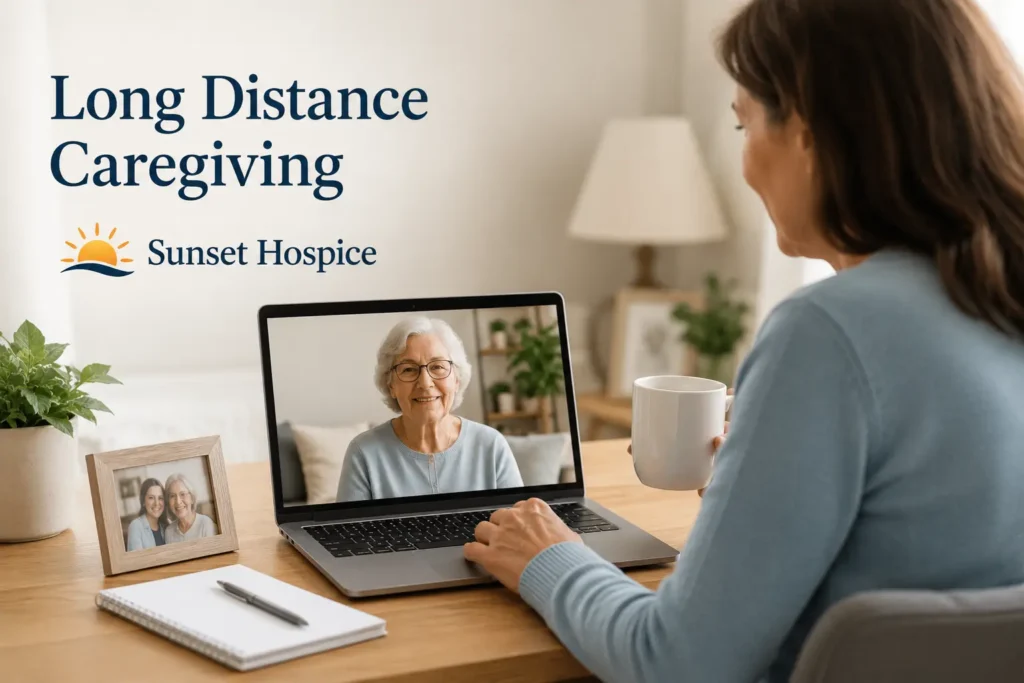
Video calls allow caregivers to visually assess their loved one’s condition, notice changes in appearance or behavior, and maintain emotional connection across distance. Weekly video check-ins are more informative than phone calls because they reveal what a voice alone cannot, changes in weight, energy, mobility, and mood.
Medical alert devices give loved ones a way to call for help independently. Smart home monitors can track movement patterns and flag unusual inactivity to a designated contact. Medication management apps and pill dispensers with built in alarms reduce the risk of missed or doubled doses without requiring a caregiver to be present.
3. Get Organized Around Medical Information
Long distance caregivers who are not organized around their loved one’s medical information are always one step behind in a crisis.
Keep a single, accessible document that includes the loved one’s current diagnoses, medications and dosages, physician names and contact numbers, insurance details, emergency contacts, and advance directives. Share this document with every member of the local support network and update it after every significant medical appointment.
Establish a direct relationship with your loved one’s primary physician before a health crisis occurs. Ask to be added as a healthcare contact so the medical team can communicate with you directly. Understanding what conditions to monitor and what changes to watch for puts you in a position to respond quickly rather than reactively.
4. Watch for Signs That More Support Is Needed
Long distance caregivers often miss early warning signs because they are not present to observe day to day changes. Knowing what to look for during visits and phone calls helps caregivers catch decline before it becomes a crisis.
During visits, pay attention to the condition of the home, the contents of the refrigerator, unpaid bills, changes in personal hygiene, and how the person moves around the space. These are often more reliable indicators of decline than what the person says directly, since many older adults minimize their difficulties to avoid worrying family members.
During calls, listen for changes in speech, memory, confusion, or mood. These can be early signs of cognitive decline or medication issues. If something feels different, trust that instinct and follow up. Understanding Signs of Caregiver Burnout is equally important at this stage, since long distance caregivers often push themselves past their limits trying to compensate for the distance.
5. Address Home Safety Before Problems Occur
Falls are the leading cause of injury among older adults, and most falls happen at home. A long distance caregiver who has not assessed their loved one’s home for safety hazards is managing a risk they cannot see.
During visits, walk through the home with a safety eye. Check for loose rugs, poor lighting, cluttered pathways, unsecured handrails, and bathroom hazards. Many of these issues are simple and inexpensive to fix but go unaddressed because neither the loved one nor the local network thinks to look for them. Home Safety Tips for Caregivers covers the most common hazards and how to address them before an incident occurs.
Consider arranging a professional home safety assessment through a local occupational therapist or home health agency. The resulting report gives the caregiver a concrete action list that can be addressed during a single visit or delegated to local support contacts.
6. Plan Visits Strategically, Not Just Emotionally
Many long distance caregivers visit when they feel guilty or worried rather than when visits will be most useful. Strategic visit planning makes a bigger difference than frequent emotional check-ins.
Time visits around key medical appointments so you can meet with physicians directly, ask questions, and receive information firsthand rather than through a relay. Use visits to complete tasks that cannot be done remotely, home assessments, medication reviews, financial organization, and conversations about future care preferences.
Plan at least one visit per year specifically to assess the overall situation and update the care plan. The caregiving relationship changes as the loved one’s condition changes, and an annual in-person reassessment keeps the plan current.
7. Plan for the Future While Time Allows
Long distance caregiving that works today can stop working quickly when a loved one’s condition changes. Planning for more intensive care needs before a crisis forces the decision gives families more options and less stress.
This means having honest conversations about what happens if the current arrangement stops being safe, identifying hospice and palliative care resources in the loved one’s area, understanding what Medicare covers for in-home support, and establishing legal documents including power of attorney and healthcare directives while the loved one can still participate in those decisions. Caregiver Stress compounds significantly when these conversations are avoided until a crisis.
If a loved one’s condition has progressed to the point where comfort care is the most appropriate next step, understanding what in-home hospice services are available in their area becomes a priority. Facts About Hospice Care for Families provides a clear overview of what hospice includes, how it works, and what families can expect from the first call through the bereavement period.
The Emotional Weight of Caregiving From a Distance
Long distance caregiving is not only a logistical challenge. It is an emotional one that unfolds over months and years, often while the caregiver is also managing their own life demands.
Grief is a significant part of this experience. Many long distance caregivers grieve the relationship they once had with their loved one as illness changes the person they know. Understanding the Five Stages of Grief helps caregivers recognize that what they are feeling during this process is normal and does not require them to hide it or push through it alone.
Reaching out for support, whether through a caregiver support group, a therapist, or a hospice social worker, is not a sign of failure. It is one of the most practical things a long distance caregiver can do to sustain the role over time. Self Care for Caregivers addresses this directly, offering strategies that fit into real caregiving lives rather than adding to an already full plate.
Conclusion
Long distance caregiving is manageable with the right systems, the right support network, and the right mindset. At Sunset Hospice, we work directly with long distance families across the Greater Houston area, providing in-home nursing care, pain and symptom management, Social Worker support, Chaplain services, and 24/7 on-call nursing so families who cannot be present every day know their loved one is fully supported by a team that is.