Five Stages of Grief: Complete Guide for Families
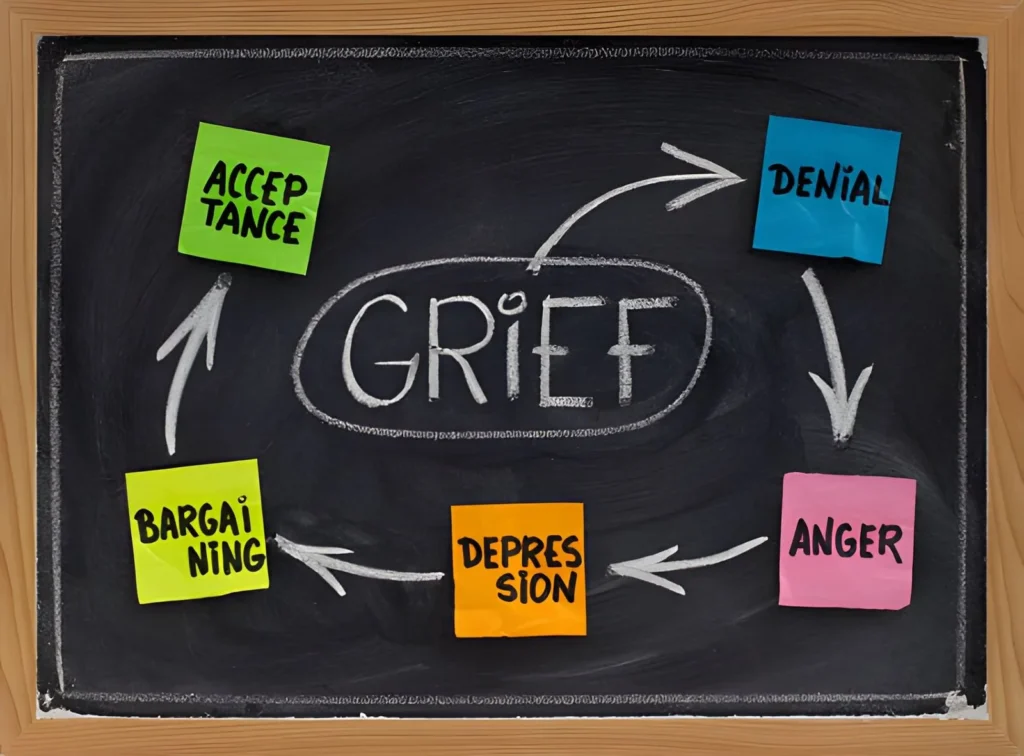
The five stages of grief, denial, anger, bargaining, depression, and acceptance, provide a framework for understanding the emotional journey families experience after losing a loved one. Developed by psychiatrist Elisabeth Kübler-Ross in 1969, these stages describe common emotional responses to loss rather than a fixed sequence everyone follows in order. Grief is deeply personal and family members may experience these stages differently, move between them repeatedly, or experience several simultaneously.
Understanding these stages helps families normalize their grief experience and seek appropriate support during one of life’s most difficult transitions.
What Are the Five Stages of Grief?
The five stages of grief describe the emotional responses most people experience when processing significant loss. These stages apply to the death of a loved one, terminal illness diagnosis, and anticipatory grief experienced during hospice care. Understanding each stage helps families recognize their grief as normal and identify when professional support would be beneficial.
Stage 1: Denial
Denial is typically the first emotional response to loss or terminal diagnosis. It acts as a natural protective buffer that prevents the mind from becoming immediately overwhelmed by the full reality of the situation.
During denial, families may struggle to accept a terminal diagnosis, continue researching curative treatments after hospice enrollment, or find themselves unable to emotionally process what is happening despite understanding it intellectually. Denial is not dishonesty or weakness. It is the mind’s way of absorbing devastating news at a manageable pace.
Denial often begins to lift as the reality of the situation becomes unavoidable through visible physical changes in the loved one or conversations with the hospice medical team.
Stage 2: Anger
Anger emerges as denial fades and the reality of loss becomes more present. This anger may direct itself toward medical professionals, family members, the dying person, or a higher power.
Many family members feel immediate guilt about experiencing anger during such a painful time. However, anger is a natural and healthy part of grief processing. It represents emotional energy that needs expression rather than suppression. Families managing Signs of Caregiver Burnout often notice that unaddressed anger contributes significantly to emotional exhaustion during the caregiving period.
Anger frequently masks deeper emotions including fear, helplessness, and profound sadness. Recognizing what lies beneath the anger helps families process it more effectively rather than remaining stuck in it.
Stage 3: Bargaining
Bargaining involves attempts to negotiate with a higher power, medical professionals, or fate to reverse or delay the loss. Common bargaining thoughts include wondering what could have been done differently, making promises in exchange for more time, or focusing intensely on what-if scenarios.
This stage often involves significant guilt and self-blame as families review past decisions and wonder whether different choices would have changed the outcome. Bargaining is the mind’s attempt to regain a sense of control during a situation that feels completely uncontrollable.
Understanding Hospice Care Stages of Death alongside the grief stages helps families recognize that both the patient’s physical journey and the family’s emotional journey follow natural progression patterns that deserve compassionate attention.
Stage 4: Depression
Depression in grief is a natural response to loss rather than a clinical disorder requiring medication. It represents the deep sadness that comes from fully acknowledging the reality and permanence of the loss.
During this stage, families may withdraw socially, lose interest in daily activities, experience persistent crying, and feel a profound sense of emptiness. Energy levels drop significantly and even simple tasks can feel overwhelming. This stage often intensifies around significant dates, milestones, and anniversaries.
Long Distance Caregiving adds additional complexity to grief depression because remote family members may feel guilt about their physical absence during the dying process alongside their grief about the loss itself.
Stage 5: Acceptance
Acceptance does not mean the grief is over or that the loss feels acceptable in any positive sense. It means the bereaved person has reached a point of acknowledging the reality of the loss and beginning to find ways to move forward while carrying their grief.
During acceptance, families begin re-engaging with daily life, finding meaning in memories of their loved one, and rebuilding routines that accommodate the absence. Many people describe acceptance as learning to live with the loss rather than getting over it. Acceptance does not happen on a fixed timeline and may be reached and lost multiple times throughout the grief journey.
How the Five Stages Apply to Anticipatory Grief?
Families do not only experience the five stages of grief after a loved one dies. Many families begin grieving during the terminal illness process itself, a phenomenon known as anticipatory grief. Anticipatory grief during hospice care in Brookshire is a genuine grief process that deserves the same recognition and support as post-death bereavement.
Families caring for a loved one with terminal illness often experience denial about the prognosis, anger about the unfairness of the situation, bargaining with medical teams about treatment options, depression about the anticipated loss, and moments of acceptance about what lies ahead, all while their loved one is still living.
Our blog on How to Qualify for Hospice Care helps families understand the medical reality of terminal prognosis, which often triggers the grief process before physical death occurs. Recognizing anticipatory grief as legitimate helps families seek support earlier rather than waiting until after their loved one has died.
Moving Through Grief: What Families Need to Know
Understanding how grief actually works in practice helps families approach their own experience with more compassion and realistic expectations. Grief does not follow a straight line and most people move between stages multiple times before reaching sustained acceptance.
1. Grief Is Not Linear
The five stages of grief were never intended as a sequential checklist. Most people experience them in varying orders, revisit stages they thought they had passed through, and experience multiple stages simultaneously during particularly difficult periods.
Grief intensity often fluctuates unpredictably. A family member may feel moments of genuine acceptance one day and deep depression the next without this representing failure or regression in their healing process.
2. Grief Looks Different for Everyone
Each family member processes the same loss differently based on their relationship with the deceased, personal coping style, existing mental health, available support systems, and life circumstances. Two siblings grieving the same parent may have completely different grief experiences without either being wrong.
These differences can create tension within families when members do not understand why others are grieving differently. Open communication and mutual respect for individual grief processes helps families support each other rather than inadvertently creating additional conflict during an already painful time.
Grief Support Resources for Families
Several structured resources help families navigate the five stages of grief with professional guidance and community connection. Professional and community grief resources provide structured support that supplements personal coping strategies.
1. Hospice Bereavement Programs
Most hospice providers offer comprehensive bereavement programs that include individual counseling, support groups, educational materials about grief, and follow-up calls during significant dates including holidays and anniversaries.
These programs recognize that grief continues long after the death and that different family members need different types of support at different times. Mourning the Death of a Parent addresses the specific grief experience of adult children who have lost a parent, which represents one of the most common hospice bereavement situations.
2. Community and Faith Based Support
Grief support groups through faith communities, hospitals, and community organizations provide connection with others who understand loss from personal experience. Shared grief experiences reduce isolation and normalize the grief process in ways that individual therapy alone cannot always provide.
Five Stages of Grief: Quick Reference
Each stage of grief carries distinct emotions, thought patterns, and support needs that help families better understand what they and their loved ones are experiencing during bereavement.
| Stage | Core Emotion | Common Thoughts | Support Needed |
|---|---|---|---|
| Denial | Shock and disbelief | This cannot be happening | Gentle presence and patience |
| Anger | Rage and resentment | This is not fair | Nonjudgmental listening |
| Bargaining | Guilt and regret | What if I had done more | Reassurance and validation |
| Depression | Deep sadness | Nothing matters anymore | Consistent presence and professional support |
| Acceptance | Peace and adjustment | I can move forward | Encouragement and community connection |
Conclusion
The five stages of grief provide a valuable framework for understanding the emotional journey families experience after losing a loved one or during the anticipatory grief of terminal illness. Denial, anger, bargaining, depression, and acceptance are not steps to complete in order but rather emotional experiences that most grieving people encounter in varying patterns throughout their healing journey.
Sunset Hospic supports families through every stage of this process with dedicated bereavement counseling, social worker support, chaplain services, and structured grief programs that continue for up to 13 months after loss, ensuring families never navigate the grief journey without compassionate professional guidance and community connection.