Mottling Before Death: What Families Should Know
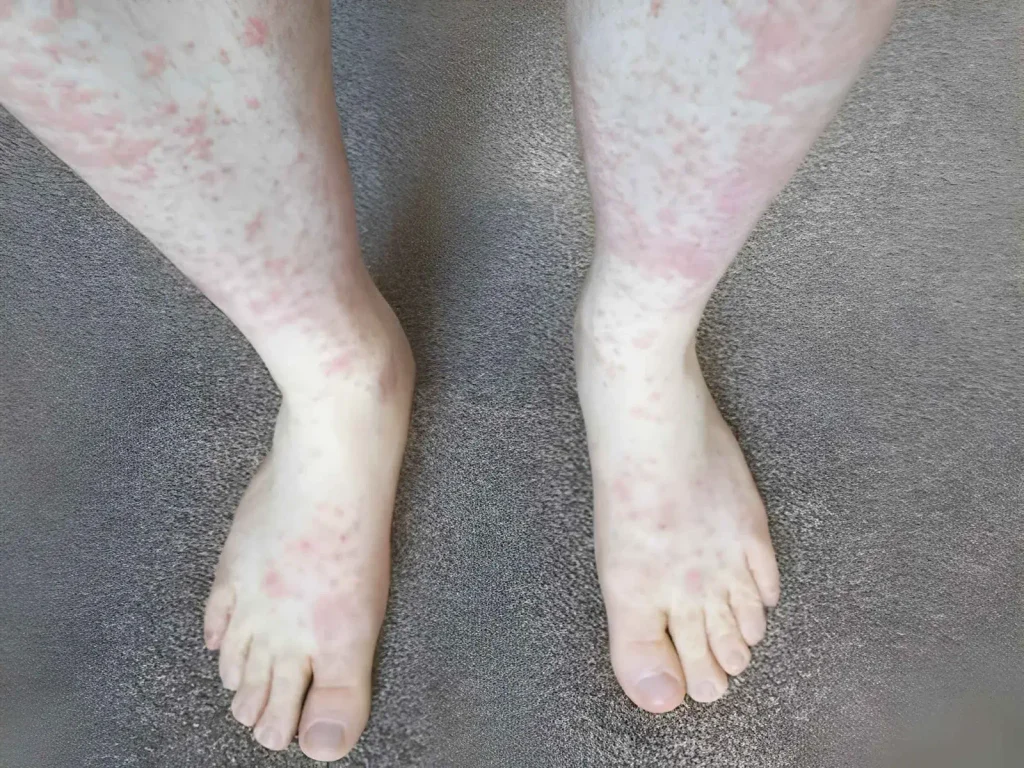
Mottling before death is a blotchy, lace like pattern of purple, blue, or reddish discoloration that appears on the skin as circulation slows in the final stage of life. It usually starts on the feet and toes, then moves up the legs to the knees, and may later reach the hands and torso. The skin feels cool and the color often deepens when a leg hangs down. Mottling is not painful and the patient is generally unaware of it.
For most patients it appears within the last few days, and often the last hours, though the timing varies from person to person
What Causes Mottled Skin Before Death?
Near the end of life, the heart gets weaker and blood pressure drops. The body then sends the blood it still has to the brain, heart, and lungs. Those organs come first, so the hands and feet get much less. This is the body making a choice about where its remaining energy goes.
Blood slows down in the tiny vessels under the skin, and some of it pools. That is what makes the patchy purple and blue pattern that families see. Doctors sometimes call this pattern livedo reticularis, and the bluish color in fingers and lips is called cyanosis. Both words describe the same basic problem, which is blood that is no longer moving the way it should.
Poor circulation is the cause, not pain. A hospice nurse can press on the skin to check, because mottled areas get their color back more slowly than healthy skin does. Families often worry they missed something or did something wrong, and that is not the case. Mottling is part of the natural process of the body shutting down.
Where Mottling Shows Up on the Body?
Skin mottling usually follows the same order. It begins at the parts of the body that are furthest from the heart and moves inward. Knowing that order helps families understand what they are looking at.
1. It Starts on the Feet and Toes
The feet are almost always first. Toes may look dusky or purple, and the bottoms of the feet often show the lacy pattern the clearest. The change can appear over a few hours rather than slowly across days.
Cold hands and feet are one of the most common signs of dying that families notice. The skin feels cool even when the room is warm, and nail beds can turn a little blue. Socks and blankets will not warm the feet back up, because the problem is blood flow and not room temperature. Cover them anyway for comfort and dignity.
2. It Moves Up the Legs to the Knees
Next the pattern spreads up the calves and settles around the knees. Mottling on the knees is one of the end of life signs hospice nurses watch most closely. Many nurses check the knees first when they arrive for a visit.
The color often looks stronger when the leg hangs down and lighter when the leg is lifted. That happens because gravity pulls on blood that is already moving slowly. The pattern may also look different from one hour to the next. Neither change means the person is getting better or worse in that moment.
3. It Can Reach the Hands and Arms
Hands and fingers may be next, though not for everyone. Fingertips get cold first, and the backs of the hands can look marbled. The nail beds often turn a dusky blue at about the same time.
Some people never get mottled hands at all. That does not mean the body is not going through the same stage. Every person moves through the final days in their own way. The care team reads the whole picture rather than any single sign.
4. It May Spread to the Chest Last
In the final hours, mottling can reach the thighs, the belly, and sometimes the chest. When it spreads this far, the body is usually very close to the end. Skin over the chest and back may also feel cooler than before.
The lips and the skin around the mouth may change color too. This often happens at the same time as changes in breathing. Families sometimes find this part the hardest to watch, and that reaction is completely normal. Ask the nurse to explain what she sees, because understanding it makes it easier to stay present.
Mottling and the Other Signs That Come With It
Mottled skin before death rarely shows up alone. This table shows the other changes families see during the active dying phase. Most people will have several of them at once, though not every one.
| Change | What Families See | What It Means |
|---|---|---|
| Mottling | Purple or blue lacy patches on feet, knees, and hands | Blood flow slowing at the edges of the body |
| Cool skin | Cold hands and feet while the chest stays warm | Blood going to the vital organs first |
| Less urine | Smaller amounts, darker in color | The kidneys slowing down |
| Breathing changes | Long pauses, then fast shallow breaths | Cheyne Stokes breathing as the brain slows |
| Death rattle | A wet rattling sound in the throat | Fluid the person can no longer clear |
| Deep sleep | Sleeping most of the day, little response | The body saving the energy it has left |
Our guide to the hospice care stages of death goes through these changes in order, and what to expect when someone is dying covers what each of the last few days can look like. Reading them ahead of time helps families feel steadier when the changes start. Most people say the fear comes from not knowing what is normal.
How Long After Mottling Does Death Happen?
This is the first thing most families ask, and no one can give an exact answer. Anyone who promises a precise number is guessing. Mottling usually shows up in the last few days, and for many people in the last day or last few hours. Some people have mottled skin and live longer than expected. Others die soon after it starts. The pattern tells you the body is close, not exactly how close.
A hospice nurse looks at mottling together with breathing, urine output, and how alert the person is. Ask the nurse what she is seeing, because she can tell you far more than any general timeline. She can also tell you if family members who live far away should start traveling now. That one question is worth asking directly.
What Families Can Do When Mottling Starts?
Comfort is the whole goal now. A few things help, and a few common instincts can cause harm:
- Use a light blanket for warmth and dignity
- Skip heating pads and hot water bottles, because skin with poor blood flow burns easily
- Do not rub or massage the mottled areas hard
- Turn the person gently every few hours to protect the skin
- Keep talking, since hearing often stays even when the person cannot answer
Call the hospice on call nurse about any change that worries you. That call is always the right first step, day or night. The nurse would much rather answer a question at 3 a.m. than have a family call 911 and undo the plan everyone built together.
How Hospice Helps Families During the Final Days?
Care does not slow down as the body does. The team visits more often, changes medicines as needed, and stays close by phone. Some agencies send a nurse daily at this stage, and the schedule is set around what the family needs.
Comfort care stays the focus. Pain management for terminal illness keeps going on a set schedule, and medicines for hard breathing and terminal restlessness are adjusted as things change. The four levels of hospice care also allow a nurse to stay in the home around the clock during a crisis. Families do not have to move their loved one to get that level of attention.
Families need help too. A social worker handles the practical parts, a chaplain sits with the family, and bereavement care continues afterward, including grief support groups in the months that follow. The team also explains what to do in the hours right after a death, so nobody is left guessing. Knowing those steps in advance takes a real weight off the family.
Support for Families Across Cypress and Greater Houston
Most families want their loved one at home for this part, in a familiar room with familiar voices nearby. That is where most hospice patients spend their final days. Home also lets grandchildren, neighbors, and longtime friends visit in a way a hospital never allows.
At Sunset Hospice, our team provides hospice care in Cypress, hospice care in Houston, and care across Tomball, Spring, Magnolia, Katy, and The Woodlands, with in home nursing, pain and symptom management, social worker guidance, chaplain services, 24/7 on call nursing, and bereavement support. Call 281-290-7600 to talk with our team about care for your loved one. Our nurses can answer questions about what you are seeing right now and arrange a visit the same day when it is needed.