Hospice Medical Equipment: What’s Provided and How It Works
Hospice medical equipment comes to the home at no cost to the family when it relates to the terminal diagnosis. The standard delivery includes a hospital bed, an over bed table, a wheelchair or walker, a bedside commode, and oxygen equipment when breathing support is needed. A medical supply company delivers and sets everything up, usually within a day of the order, and they handle maintenance, repairs, and pickup afterward. The hospice nurse decides what is needed and places the order. Families do not shop, rent, or pay for any of it.
How Hospice Medical Equipment Gets to Your Home?
The hospice nurse assesses the home during the first visit and orders what the patient needs. That order goes to a durable medical equipment supplier the agency works with, often called a DME company. Most deliveries arrive the same day or the next, and urgent items such as oxygen can usually come within hours. The family does not contact the supplier or fill out any paperwork for this.
Delivery drivers do more than drop things off. They assemble the hospital bed, position it where the family wants it, show someone how the controls work, and take the packaging away with them. Ask them to demonstrate each function before they leave, since figuring out a bed remote at midnight is a poor use of anyone’s energy. Have whoever will be doing the overnight care watch that demonstration if possible.
Everything stays on loan rather than being purchased. The equipment belongs to the supply company, the hospice benefit covers the rental, and the company picks it up when it is no longer needed. Nothing arrives that the family has to store, sell, or dispose of later. That arrangement also means repairs and replacements cost nothing.
The Standard Hospice Equipment Package
Six items cover what most patients receive, though the exact list depends on the diagnosis and how much the patient can still do. The nurse adds and removes items as the illness progresses.
1. The Hospital Bed
A hospital bed is usually the first and largest item to arrive. The head and feet raise electrically, which helps with breathing, swallowing, acid reflux, and swelling in the legs. Side rails prevent falls, and the height adjusts so caregivers can work without bending over. Most beds also lower close to the floor, which reduces injury if a patient does slide out.
Position matters as much as the bed itself. Put it in a room near a bathroom, with space on both sides so two people can work, and keep it away from direct sunlight and drafts. Many families choose a living room over a bedroom, since it keeps the patient near the activity of the house instead of isolated down a hallway. Measure doorways before delivery day, because a few older homes have hallways too narrow for a full size frame.
2. The Pressure Relieving Mattress
Standard hospital mattresses are often replaced with an alternating pressure or low air loss mattress. These shift air through internal chambers so no single area of skin carries weight for too long. The quiet humming they produce is normal and most patients stop noticing it within a day.
Skin breakdown happens fast in patients who cannot reposition themselves. A specialty mattress reduces that risk considerably, though it does not replace turning. Ask the nurse about one if the patient is spending most of the day in bed, since these are usually ordered on request rather than by default. Mention any redness over the heels, hips, or tailbone, as that is the trigger for ordering one.
3. Oxygen Equipment
Oxygen comes as a concentrator, which pulls oxygen from room air and runs on electricity, plus portable tanks as a backup. The concentrator runs continuously and does need to be plugged in, so note which outlet it uses. Avoid extension cords and power strips, since the unit draws steady current.
Safety rules matter here. No smoking anywhere in the house, no open flames or candles, no petroleum based products such as Vaseline near the face, and nothing stored on top of the unit. Houston families should also ask about outages, since a concentrator stops working without power. Registering with CenterPoint Energy as a critical care customer and keeping tanks charged covers that gap. Keep one tank by the bed at all times during hurricane season.
4. Mobility Equipment
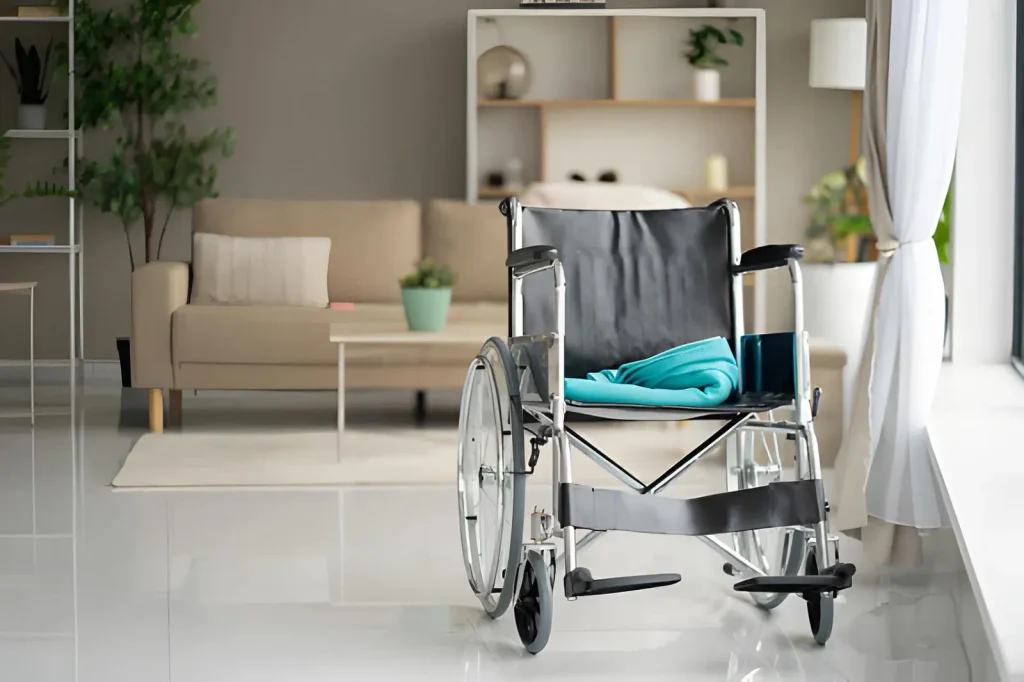
Walkers, wheelchairs, and transport chairs arrive based on what the patient can still manage. Needs change quickly here, and a patient using a walker one month may need a wheelchair the next. Tell the nurse as soon as walking feels unsteady rather than waiting for a fall.
A gait belt is one of the most useful small items available. It gives a caregiver something secure to hold during a transfer instead of pulling on an arm or under the shoulders. Ask the nurse for one early and ask them to show you the correct grip. Shoulders dislocate easily in weakened patients, which is why the belt matters more than it looks.
5. Bathroom and Bedside Equipment
A bedside commode saves the walk to the bathroom, which becomes the most dangerous trip in the house as weakness sets in. Shower chairs, tub benches, grab bars, and raised toilet seats all reduce fall risk during bathing. A commode can also be placed over a toilet or used as a shower seat, so one item often solves several problems.
These items often get overlooked. Families tend to focus on the bed and the oxygen and forget that most falls happen on the way to the toilet at night. Our guide on how to prepare your home for hospice care covers how to arrange a room around these items. Add a night light on that path while you are at it.
6. Suction and Feeding Equipment
Suction machines clear secretions a patient can no longer swallow or cough out, and they help with the wet rattling sound families find distressing in the final days. The nurse teaches the correct technique, since suctioning too deeply causes harm. Repositioning the patient onto their side often helps as much as the machine does.
Feeding pumps and supplies come when a patient has a feeding tube already in place. Hospice continues managing existing equipment rather than starting new interventions, and the care team discusses what makes sense as the illness progresses. Those conversations belong with the nurse and physician together, since the answers depend on the patient’s goals.
What Hospice Equipment Covers and What It Does Not?
Coverage follows one rule: the equipment must relate to the terminal diagnosis and support comfort. This table shows how that works in practice.
| Item | Covered by Hospice | Notes |
|---|---|---|
| Hospital bed and mattress | Yes | Delivered, assembled, and maintained by the supply company |
| Oxygen concentrator and tanks | Yes, when breathing support is needed | Includes tubing, cannulas, and backup tanks |
| Wheelchair, walker, transport chair | Yes | Swapped out as mobility changes |
| Bedside commode, shower chair, grab bars | Yes | Often require a specific request |
| Pressure relieving mattress | Yes, based on skin risk | Ask the nurse rather than waiting for it |
| Incontinence supplies, gloves, wound dressings | Yes | Delivered on a schedule so supplies do not run out |
| Suction machine, nebulizer | Yes, when symptoms call for it | Includes training from the nurse |
| Stair lift, bathroom remodeling, home modifications | No | These count as home improvements, not medical equipment |
| Equipment for unrelated conditions | Generally no | A device for a condition outside the terminal diagnosis usually falls elsewhere |
Ask before buying anything. Families often purchase a shower chair or a wedge pillow out of pocket, then learn the hospice could have supplied it the same week at no cost. Keep a running list of small frustrations and bring it to the next nurse visit, since many of them have an equipment solution.
How Equipment Changes as Needs Change?
Nothing about the first delivery is permanent. The nurse reviews equipment at every visit and places new orders as the situation shifts. Items no longer in use get collected so the house does not fill up.
Progression usually runs in one direction. A cane gives way to a walker, a walker to a wheelchair, and a regular bed to a hospital bed with a specialty mattress. Each step gets ordered before the need becomes urgent, which is a large part of what does an RN case manager do matters so much to daily life at home. Anticipating the next stage is the difference between a smooth week and a crisis.
Intensity of care can also change without moving the patient. The four levels of hospice care allow continuous nursing at home during a symptom crisis, and equipment arrives to support that level of care as well. Nothing about a level change requires a hospital admission.
Caring for the Equipment at Home
Families do very little maintenance, though a few habits prevent problems:
- Keep the bed remote and the call bell within the patient’s reach
- Wipe surfaces that touch skin daily, including rails and commode seats
- Check oxygen tubing for kinks, and keep spare cannulas on hand
- Report anything broken immediately, since repair and replacement are covered
- Leave clear paths around the bed for two people to work
Call the hospice first when something fails, rather than the supply company directly. The agency logs the problem, pushes for a faster response, and can send a nurse if the failure affects care. A broken bed motor on a Saturday is their problem to solve, not yours. Keep the on call number saved in every phone in the house.
What Happens to the Equipment Afterward?
The supply company collects everything after the patient dies or leaves hospice care. Pickup is usually arranged within a few days, and families can request more time. Nobody will arrive unannounced to take anything.
Nobody expects a grieving family to handle this. Tell the hospice when you want the equipment gone, since some families want the bed out of the house immediately while others need a week before they can face the empty room. Both responses are normal, and the timing is yours to set. The agency will coordinate the pickup so you do not have to make the call.
Supplies left over, such as unopened dressings and gloves, can usually stay with the family or be donated. Controlled medications are handled separately by the nurse, following state rules and agency policy. Ask the nurse what to do with anything you are unsure about rather than throwing it out.
Hospice Equipment and Care in Cypress and Greater Houston
Ask any agency how fast equipment arrives and who to call when something breaks at 2 a.m. Those two answers tell you more about daily life with that agency than any brochure will. Ask which supply company they use as well, since response times vary between vendors.
At Sunset Hospice, our team provides hospice care in Cypress, hospice care in Houston, and care across Tomball, Spring, Magnolia, Katy, and The Woodlands, with in home nursing, medical equipment and supplies, pain and symptom management, social worker guidance, chaplain services, 24/7 on call nursing, and bereavement support. Call 281-290-7600 to ask what equipment your loved one would receive at home. Our nurses can walk through the setup room by room before the first delivery.