Morphine at End of Life: What Families Should Know
Morphine at end of life is used to ease two things: pain and the feeling of not getting enough air. Hospice teams start with small doses and raise them only as symptoms call for it, which is very different from the large doses people picture. Research has generally not found that morphine given at doses matched to a patient’s symptoms shortens life.
The most common side effects are drowsiness and constipation, and both can be managed. Families often carry real fear about giving a dose, and that fear deserves a clear answer rather than a vague one.
Why Hospice Teams Use Morphine?
Morphine is an opioid, and it is one of the most effective medicines available for serious pain. It has been used in medicine for well over a century, so its effects are understood in detail. Hospice teams reach for it because it works quickly and can be given in several forms, even when a patient can no longer swallow pills. That flexibility matters a great deal in the last weeks, when swallowing often becomes unreliable.
It also treats something many families do not expect. Morphine reduces the feeling of air hunger, which doctors call dyspnea, and that makes it valuable for patients with lung disease, heart failure, or cancer in the chest. A patient struggling to breathe often settles within minutes of a small dose. For many families, that is the first moment they see real relief.
The dose is matched to the symptom, not to the diagnosis. A nurse starts low, watches the response, and adjusts from there. This careful stepping up is called titration, and it is the heart of safe opioid use in hospice. Two patients with the same illness can end up on very different doses for this reason.
What Morphine Does for a Dying Patient?
Three effects matter most in the final weeks, and families usually see all three. Each one addresses a different source of suffering.
1. It Controls Pain That Other Medicines Cannot Reach:
Pain from advanced cancer, bone disease, or pressure sores often stops responding to over the counter medicines. Morphine works on the nervous system itself, so it reaches pain those drugs cannot touch. Patients who have been guarding one side of the body often relax once the dose takes hold.
Scheduled dosing works better than waiting for pain to return. Pain management for terminal illness explains why a steady schedule holds pain down more effectively than chasing each flare with a rescue dose. Breakthrough doses still exist for the hard moments between scheduled ones.
2. It Eases the Feeling of Not Getting Enough Air:
Shortness of breath frightens patients and families more than almost any other symptom. Morphine lowers how hard the body feels it must work to breathe, even when oxygen levels stay the same. This is why a patient can look calmer without any change on the oxygen monitor.
Breathing often looks calmer within a short time. The chest stops heaving, the shoulders drop, and the patient rests. Oxygen alone frequently does not achieve this on its own. A fan aimed gently at the face can add to the effect.
3. It Calms the Panic That Comes With Breathlessness:
Fear makes breathing worse, and worse breathing deepens the fear. Morphine helps break that loop, which is why patients often look more peaceful soon after a dose. Family members usually notice their own shoulders drop at the same time.
Anxiety medicines are sometimes added alongside it. The hospice nurse decides that combination based on what the patient is showing, not on a fixed formula. Ask the nurse to explain what each medicine in the home is for, so nobody is guessing during a hard night.
Does Morphine at End of Life Speed Up Death?
This is the question nearly every family asks, and it deserves a direct answer. Asking it does not make anyone a bad caregiver. Studies of hospice patients have generally not found that opioids given at doses matched to symptoms shorten survival. Serious slowing of breathing is uncommon when doses are raised gradually by a trained team. Uncontrolled pain and severe breathlessness carry their own toll on a weakened body. Relief often allows a patient to rest, drink a little, and speak with family again.
Timing creates much of the fear. Morphine use tends to rise in the same days the body is naturally shutting down, so a death that follows a dose can feel caused by it. Changes such as cool skin, deep sleep, and mottling before death usually show the body was already moving through its final stage. The medicine rises because the symptoms rose, not the other way around.
Bring the question to the hospice nurse or physician directly. They can explain what they are seeing in this specific patient, which no general article can do. Many families find that one conversation settles weeks of private worry.
Side Effects and How the Team Manages Them
Most side effects are predictable, and the team plans for them from the first dose. Report anything new rather than waiting for the next scheduled visit.
| Side Effect | What Families Notice | What Usually Helps |
|---|---|---|
| Constipation | No bowel movement for days, discomfort | A stool softener or laxative started with the morphine |
| Drowsiness | More sleep in the first days on a new dose | Often settles within two or three days as the body adjusts |
| Nausea | Upset stomach early on | An anti nausea medicine, usually short term |
| Dry mouth | Cracked lips, difficulty speaking | Mouth swabs, lip balm, small sips or ice chips |
| Confusion | Muddled speech or seeing things | Dose review by the nurse, since other causes are common too |
| Itching | Scratching, especially early on | Usually mild and treatable, so report it |
Constipation is the one that never resolves on its own. Hospice teams almost always start a bowel regimen at the same time as the morphine for that reason. Tell the nurse how many days it has been, since that number guides what she recommends next.
How Morphine Is Given at Home?
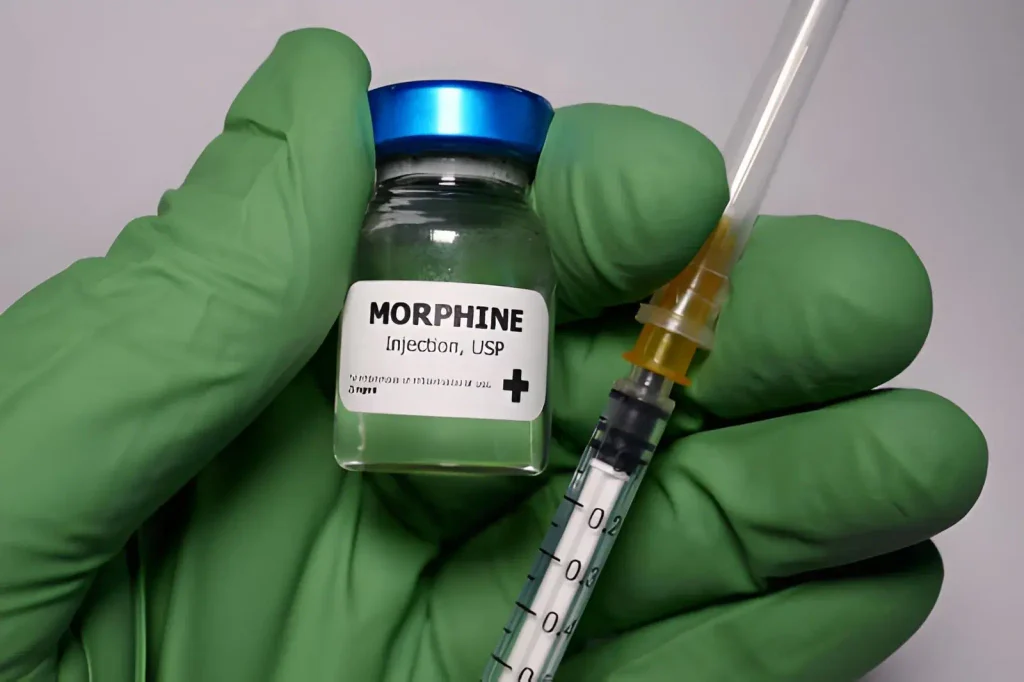
Most patients at home receive a liquid concentrate placed under the tongue. The dropper delivers a very small amount, often less than half a milliliter, which surprises families expecting something larger. The liquid absorbs through the lining of the mouth, so swallowing is not required.
That liquid sits in the hospice comfort kit, usually kept in the refrigerator. The nurse shows the family how much to give, how often, and what to write down after each dose. Nothing should be given without calling the on call line first if you are unsure. Keep the kit in the same place every time so nobody hunts for it in the dark.
Tablets, patches, and injections are also options depending on the situation. The four levels of hospice care allow continuous nursing in the home when symptoms need closer management than scheduled visits provide. The team can also arrange a short inpatient stay if comfort cannot be reached at home.
What Families Can Do When Giving Morphine?
A few habits make the whole process steadier for everyone:
- Write down each dose with the time, every time
- Treat symptoms early rather than waiting for pain to peak
- Call the on call nurse before skipping or doubling a dose
- Keep the medicine locked away from children and visitors
- Ask the nurse to watch you give a dose once before you do it alone
Guilt is common and worth naming. Giving a prescribed dose to relieve suffering is care, not harm, and the hospice team can talk this through as often as a family needs. A social worker or chaplain can sit with that feeling too, since it rarely resolves with facts alone.
Support for Families Across Cypress and Greater Houston
Families manage morphine best when someone answers the phone at 2 a.m. and explains what is happening. That support matters as much as the medicine itself, and our guides to the hospice care stages of death and what to expect when someone is dying cover the changes that often appear alongside it. Reading them in advance makes the hard nights less frightening.
At Sunset Hospice, our team provides hospice care in Cypress, hospice care in Houston, and care across Tomball, Spring, Magnolia, Katy, and The Woodlands, with in home nursing, pain and symptom management, social worker guidance, chaplain services, 24/7 on call nursing, and bereavement support. Call 281-290-7600 to talk with our team about comfort care for your loved one. Our nurses can walk you through any medication question over the phone, at any hour.